
A Milestone Celebration: 10,000 Visitors and Beyond
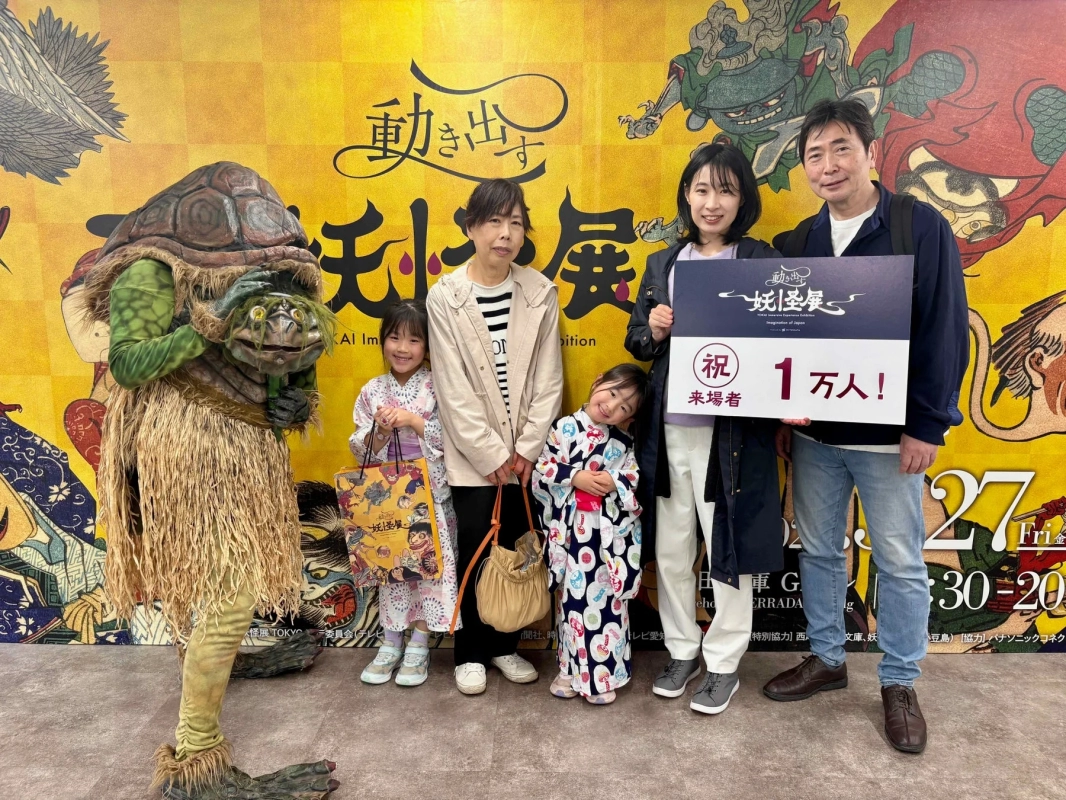
Since its opening on March 27, 2026, the “Moving Yokai Exhibition TOKYO 〜Imagination of Japan〜” has achieved a significant milestone, welcoming over 10,000 visitors to its immersive world. Held at the Terada Warehouse G1 Building in Shinagawa, Tokyo, the exhibition celebrated this achievement with a special ceremony.
The 10,000th visitors, a family from Ota Ward, Tokyo, were presented with commemorative goods, including an original muffler towel and specially printed cookies. The family shared their delight, stating, “We were able to experience searching for yokai in the videos,” and adding, “It was fun with places for children to play and moving mechanisms.”

Unveiling Japan’s Supernatural World Through Digital Art
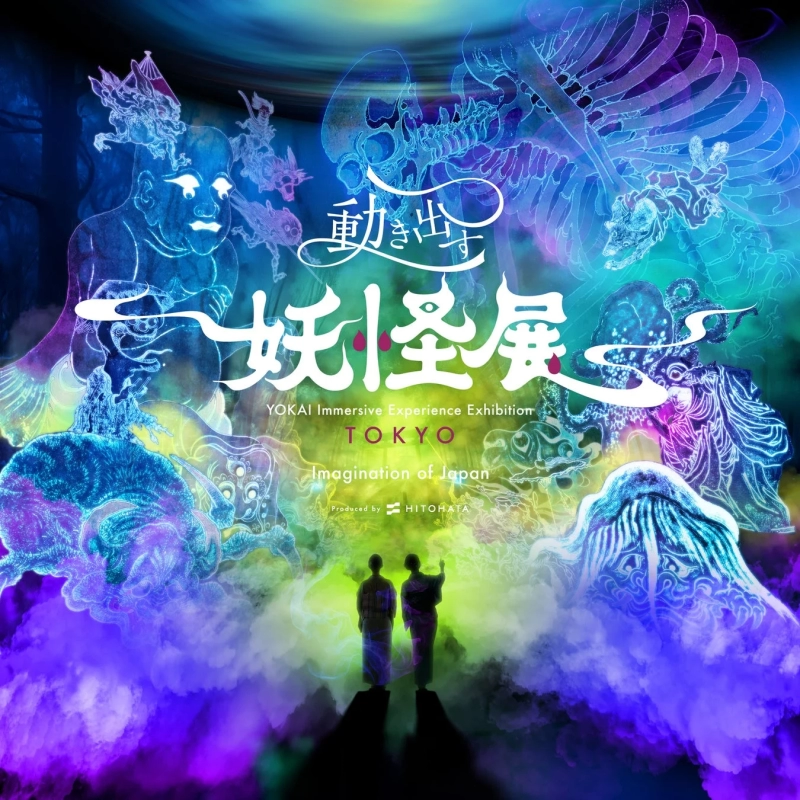
This exhibition, produced by Hitohata, reimagines Japan’s rich tradition of yokai—legendary creatures, spirits, and demons—through an innovative blend of art and technology. Drawing from Edo and Meiji-era masterpieces such as the “Hyakki Yagyo Emaki” (Night Parade of One Hundred Demons), “Hyakumonogatari” (Tales of 100 Monsters), and iconic figures like Oni (demons), Tengu, Kappa, and Tsukumogami (animate household objects), the exhibition transforms static art into dynamic, living experiences.
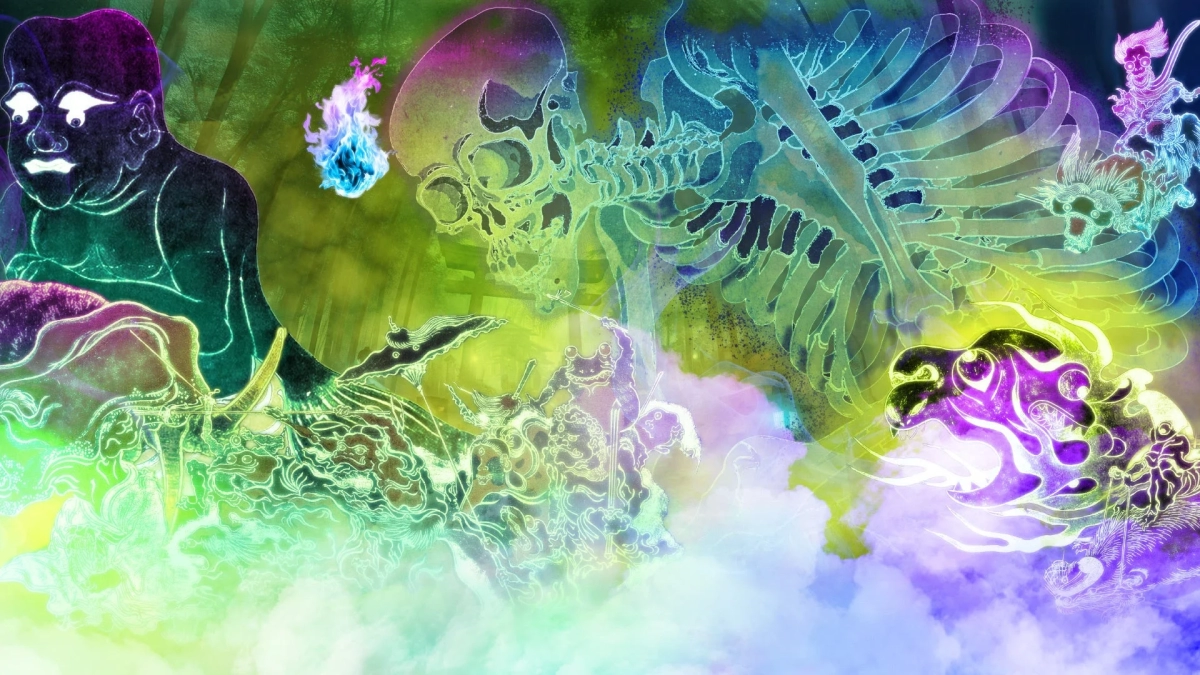
State-of-the-art digital techniques, including 3DCG, projection mapping, and holographic screens, are employed to make these humorous and sometimes eerie figures leap into motion. Complementing the visual spectacle, intricate three-dimensional models bring the yokai into physical space, creating a truly immersive environment. The exhibition also benefits from collaborations with institutions like Japan’s first ancient book museum, Nishio City Iwase Bunko, and the Shodoshima Yokai Art Museum, offering insightful explanations of yokai culture, art, and their historical connection to modern pop culture.
Highlights of the Immersive Experience
Journey into a Dynamic Yokai Realm
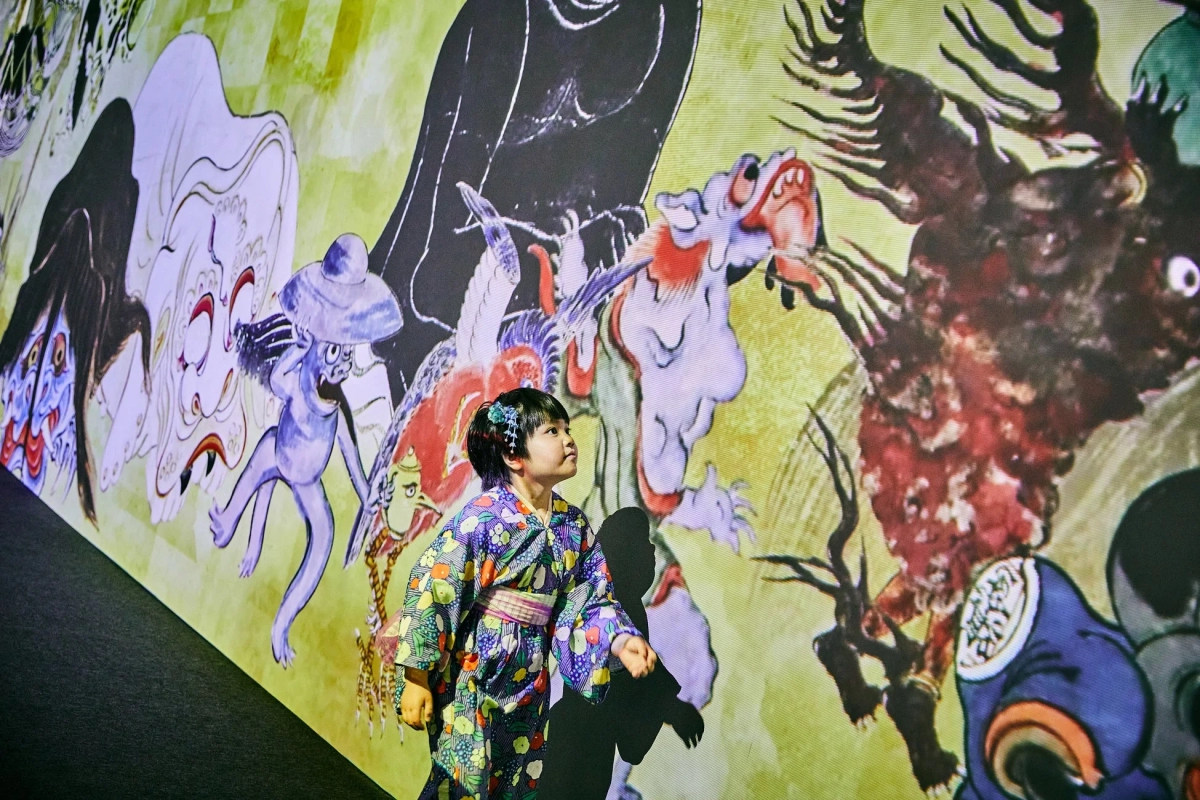
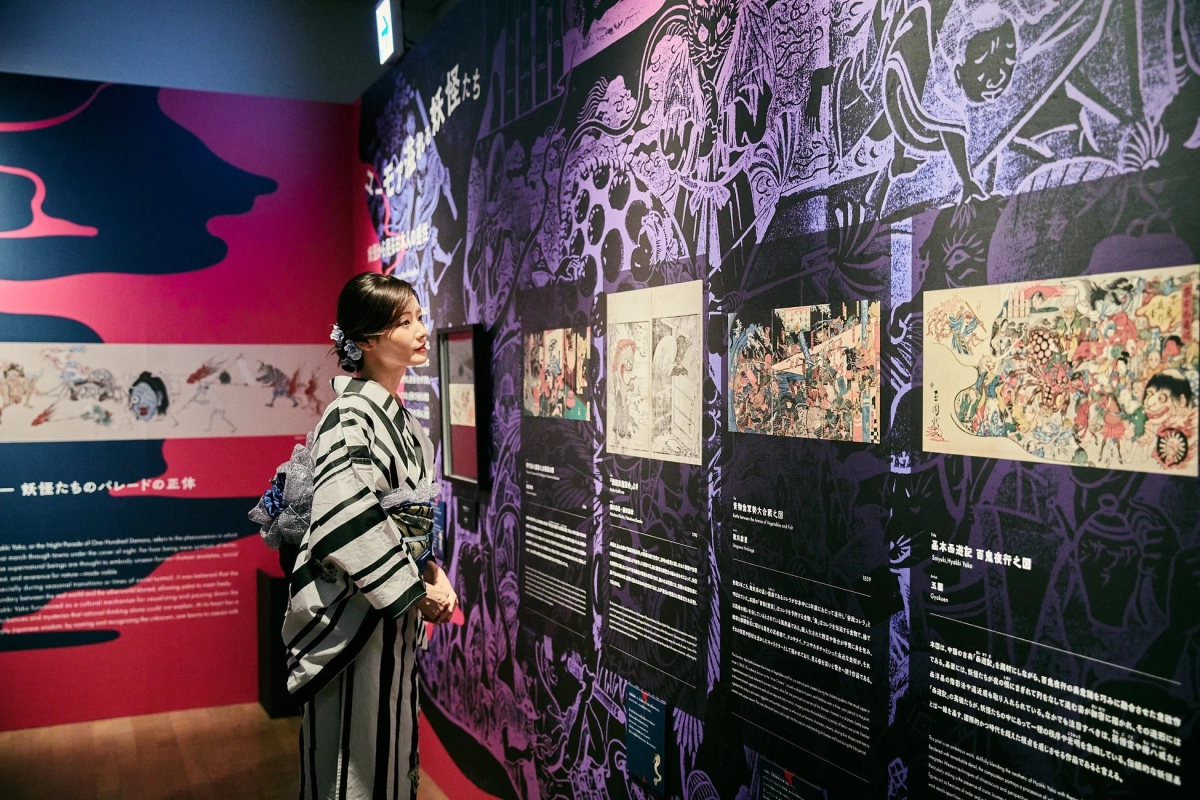
Visitors are invited to step into a vibrant, three-dimensional world where yokai move and interact. Through the interplay of 3DCG, projection mapping, and holographic screens, the exhibition offers a sensory feast. Guests can not only observe but also participate, taking photos and videos with the animated yokai, and even feeling as if they are part of a scrolling yokai picture scroll.
Encountering Realistic Three-Dimensional Figures
Beyond the digital projections, lifelike three-dimensional models of yokai such as Oni, Tengu, Kappa, and Tsukumogami are strategically placed throughout the venue. These meticulously crafted figures, combined with the immersive digital effects, allow visitors to appreciate the textures and expressions of these fantastical beings up close, adding a tangible layer to the experience.
Learning Through Valued Yokai Art and Culture
The exhibition features actual ukiyo-e woodblock prints of yokai by artists like Utagawa Kuniyoshi. With the support of Nishio City Iwase Bunko and the Shodoshima Yokai Art Museum, valuable yokai paintings and caricatures from the Edo and Meiji periods, including “Hyakki Yagyo no Zu” and “Hyakumonogatari,” are presented with detailed explanations. This segment helps visitors understand the cultural and historical contexts of yokai, from ancient Japanese myths and legends to their influence on contemporary pop culture.
An Art Experience for All Ages
Designed for a diverse audience, the exhibition offers interactive digital art experiences and playful content for children, making it enjoyable for families. Seating areas are provided for seniors, ensuring comfort during their visit. The core content is non-verbal and intuitively engaging, with explanations available in both Japanese and English, making it accessible for international visitors.
Event Details
-
Name: Moving Yokai Exhibition TOKYO 〜Imagination of Japan〜
-
Dates: March 27, 2026 (Friday) – June 28, 2026 (Sunday)
-
Hours: 9:30 AM – 8:00 PM (Last entry 7:30 PM)
-
No closing days during the period.
-
Last day, June 28, closes at 5:00 PM (Last entry 4:30 PM).
-
-
Venue: Terada Warehouse G1 Building (2-6-4 Higashi-Shinagawa, Shinagawa-ku, Tokyo)
Ticket Information
Prices (Advance / Same-day)
-
Adults: 2,400 yen / 2,600 yen
-
Students (High School, University, Vocational): 1,600 yen / 1,800 yen
-
Children (4 years old to Junior High School): 700 yen / 800 yen
-
Seniors (65 years and older): 2,300 yen / 2,300 yen
-
Children aged 3 and under are free (no ticket required).
-
Re-entry is not permitted.
-
Unaccompanied preschoolers are not allowed.
-
No refunds or changes to ticket types after purchase due to customer convenience.
-
Admission may be delayed during crowded times.
-
Student ID or age verification may be requested at the venue.
Disabled Persons’ Discount (Advance & Same-day)
-
Adults (High School age and above): 1,200 yen
-
Children: 500 yen
-
Applicable for holders of physical disability certificates, intellectual disability certificates, mental disability certificates, and atomic bomb survivor health handbooks, plus one accompanying person. “Mirairo ID” is also accepted.
Where to Purchase Tickets
Tickets can be purchased online through various platforms, as well as at convenience stores and at the venue’s ticket machine on the day of the event.
Online Sales:
System usage fees may apply.
In-Store Sales:
-
Seven-Eleven multi-copy machines (P-code: 995-884)
-
Lawson, Ministop Loppi terminals (L-code: 33418)
-
FamilyMart multi-copy machines
Issuing fees may apply.
Venue Ticket Sales:
- Venue ticket machine (same-day tickets only)
Cash only transactions.
Further Information
-
Official Website: https://www.yokaiimmersive.com/tokyo
-
Official Instagram: @yokaiimmersive
The Future of Kawaii Culture Abroad
The success of the “Moving Yokai Exhibition TOKYO” demonstrates the enduring global fascination with Japanese folklore and its potential when fused with modern digital art. This innovative approach to traditional culture offers a fresh perspective on what “Kawaii” can encompass—moving beyond typical cute characters to embrace the unique, imaginative, and sometimes wonderfully eerie aspects of Japan’s spiritual landscape. Exhibitions like this could serve as a bridge, introducing international audiences to the diverse and rich tapestry of Japanese imagination, proving that even ancient spirits can be vibrantly relevant in the digital age and expand the understanding of Japanese culture worldwide.