
Japanese Students Set Sights on 2026: Academics Lead Resolutions, O-Toshidama Cash Remains King
As the new year approaches, Japanese students are already looking ahead to 2026 with clear goals in mind. A recent survey by LINE Research, involving over 1,000 students aged 15 to 25, reveals that “study” remains the top priority for both high school and university students. Beyond academic pursuits, the cherished tradition of “O-Toshidama” (New Year’s money) continues to thrive, with a resounding preference for crisp banknotes over digital alternatives.

Academic Ambitions and Diverse Aspirations for the New Year
The survey highlighted “study” as the number one aspiration for students across the board. For high school students, nearly 60% prioritized their studies, followed by “friends/relationships” and “hobbies.” This suggests a balanced focus on academic success and social development during these formative years. Male high school students also showed a significant interest in “entrance exams/exam preparation” and “club activities/sports,” reflecting the intense competitive landscape of Japanese education and extracurricular life. Female high school students, however, placed higher emphasis on “self-improvement (appearance/inner qualities),” “diet,” and “oshi-katsu” (fandom activities, such as supporting idols or anime characters), indicating a strong drive for personal growth and engagement with pop culture.
University students echoed the importance of “study,” while also placing “part-time jobs” and “self-improvement (appearance/inner qualities)” among their top three goals. The shift towards independence and future planning is evident, with male university students prioritizing “hobbies” and “job hunting,” and female university students focusing on “part-time jobs,” “self-improvement,” and “savings.” This transition from school-centric goals to career- and finance-oriented aspirations marks a significant developmental stage.
![2026年、がんばりたいことは? [高校生・大学生/男女別] TOP10](/wp-content/uploads/2026/01/1b32e772d109353bf84c399a5b396440_resized_271x800.webp)
The Enduring Charm of O-Toshidama: A Cash-First Tradition
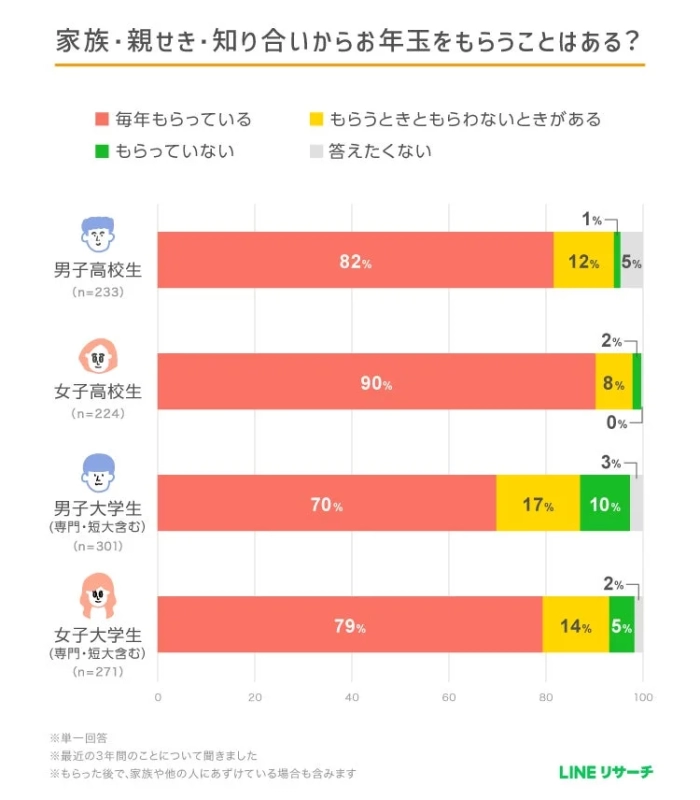
The survey also delved into the enduring tradition of O-Toshidama, the special monetary gift given by family and relatives during the New Year. The results confirm its widespread practice: over 80% of high school students and more than 70% of university students reported receiving O-Toshidama annually over the past three years. Female students, in particular, showed an even higher rate of receiving these gifts, with nearly 90% of high school girls and almost 80% of university girls participating in this custom. The act of receiving O-Toshidama, often in decorative small envelopes called “pochibukuro,” carries a sensory weight—the crisp feel of new banknotes, the joy of a tangible gift—that digital transactions cannot quite replicate.
When it comes to spending this festive windfall, students exhibit diverse strategies. High school boys often entrust their O-Toshidama to parents for bank deposits, or save it in personal stashes, while also allocating funds for games, movies, and eating out. For high school girls, cosmetics and “oshi-katsu” were top priorities, alongside personal savings and clothing.
University students, with greater financial autonomy, predominantly choose to deposit their O-Toshidama directly into their own bank accounts. Travel emerged as a significant expenditure for university students, especially for males. Female university students also prioritized fashion and beauty products.
Here’s a snapshot of how students plan to use their O-Toshidama:
-
High School Boys: Depositing with family (27.9%), personal savings (21.9%), eating out (20.5%), buying drinks/food (20.1%), games/software (18.3%), movies (17.4%).
-
High School Girls: Cosmetics (37.4%), “oshi-katsu” (36.5%), personal savings (28.3%), clothes/bags/shoes (26.9%), buying drinks/food (26.5%).
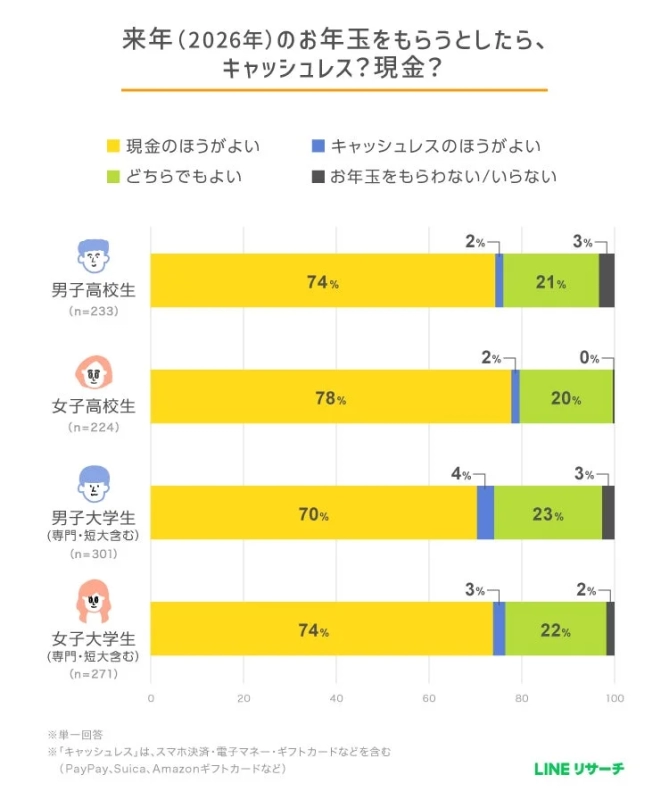
A particularly striking finding is the overwhelming preference for cash. Across all student groups and genders, over 70% expressed a preference for receiving O-Toshidama in cash rather than through cashless methods like smartphone payments or gift cards. This strong inclination towards physical currency for a culturally significant gift underlines the deep-rooted value placed on tradition and the tangible nature of money in such exchanges. A university student shared, “I want to save money from my part-time job, travel with friends, and buy merchandise for my favorite idols – basically, do everything I want!” This sentiment encapsulates the blend of practicality and passion driving student spending.
![もらったお年玉の使い道は? [高校生・大学生/男女別] TOP10](/wp-content/uploads/2026/01/1e700239d11210d232e32eb979ae2c78_resized_269x800.webp)
Looking Ahead: Education, Self-Expression, and the Future of Tradition
The 2026 aspirations of Japanese students paint a picture of a generation committed to academic excellence and personal development, while also navigating the exciting world of hobbies, relationships, and future careers. The enduring preference for cash in O-Toshidama highlights a fascinating intersection of modern financial habits and deeply cherished cultural practices. As Japanese youth continue to shape their futures, their choices in education, self-expression, and even how they prefer their New Year’s blessings, will undoubtedly influence broader societal trends and the evolving landscape of Kawaii culture both domestically and abroad. These insights offer a valuable glimpse into the priorities of young Japan, demonstrating a blend of ambition, tradition, and a keen eye for personal value. For more detailed insights, the full LINE Research report is available here and here, and on the “LINE Research” official site: https://www.lycbiz.com/jp/service/line-research/.