
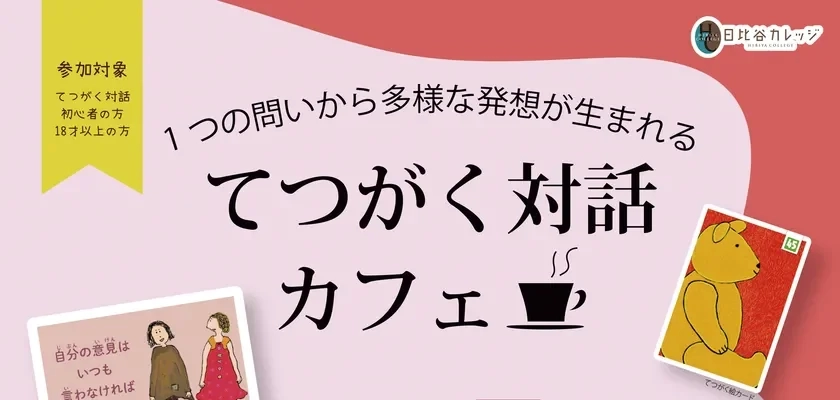
- A Gentle Introduction to Philosophical Dialogue
- Event Overview and Structure
- Exploring Thought with “Tetsugaku Cards”
- The Vision Behind the Cards
- Guiding the Dialogue: The Instructor
- Voices from Past Participants
- Event Details
- How to Apply
- Venue Information
- About Honnoki Co., Ltd.
- A Future of Deeper Connections
A Gentle Introduction to Philosophical Dialogue
The term “Tetsugaku Dialogue” (philosophical dialogue) might sound intimidating at first, conjuring images of complex academic debates. However, the “Tetsugaku Dialogue Cafe” is crafted to be an accessible and enjoyable experience for everyone. Participants are encouraged to freely express their thoughts on a given “question,” without needing any prior knowledge or feeling pressured to find a “right” answer. It’s less about formal philosophy and more about a relaxed “brain exercise” to stimulate new ways of thinking.
The session encourages active listening, allowing individuals to consider the reasons and backgrounds behind others’ opinions. This process often leads to unexpected insights, helping participants to reflect on ideas they might not usually ponder or to uncover their own dormant, creative thoughts. By shifting perspectives, daily life’s rigid assumptions can often gently unravel, offering moments of clarity and fresh understanding.
Event Overview and Structure
The evening begins with a brief introduction to the concept of “Tetsugaku Dialogue,” lasting approximately 20 minutes. Following this, participants will divide into small groups of 5-6 people to experience an actual dialogue session of about 40-50 minutes. The discussion prompts are pre-selected from charming “Tetsugaku Cards.” A facilitator will guide the conversation, ensuring even first-time participants feel comfortable and engaged.
Exploring Thought with “Tetsugaku Cards”
Central to these dialogues are the specially designed “Tetsugaku Cards,” which come in two main types: “Tetsugaku Oshaberi Card” (Philosophical Chat Cards) and “Tetsugaku E-Card” (Philosophical Picture Cards). These tools transform abstract philosophical inquiry into a playful and concrete activity.
Tetsugaku Oshaberi Card

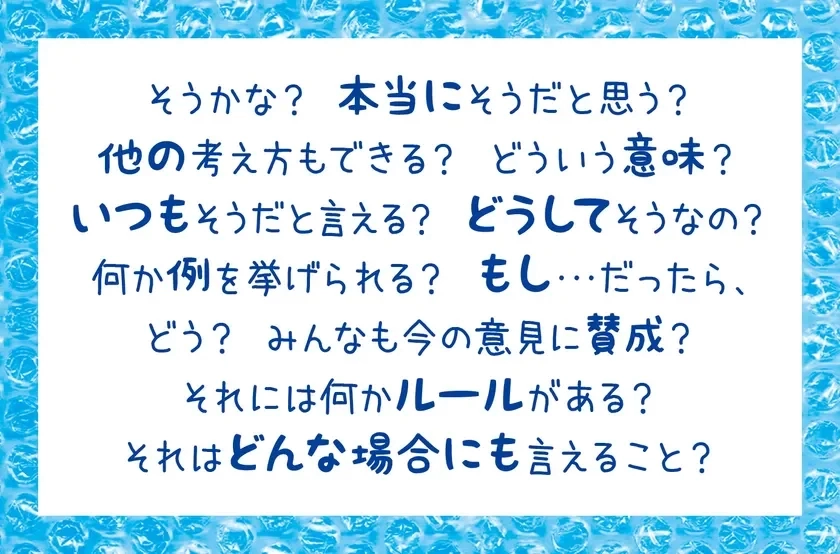
The “Tetsugaku Oshaberi Card” features a cute illustration and a single question on its front. The reverse side offers guiding words to help deepen the conversation around that question. These cards encourage participants to elaborate on their initial responses, fostering a richer exchange of ideas.
-
“Is that so? Do you really think so?”
-
“Are there other ways to think about it?”
-
“What does that mean?”
-
“Can it always be said?”
-
“Why is that?”
-
“Can you give an example?”
-
“What if…?”
-
“Does everyone agree with this opinion?”
-
“Are there any rules for that?”
-
“Does that apply in all cases?”

The cards promote a playful yet profound “brain exercise,” making complex philosophical concepts accessible and enjoyable.

Tetsugaku E-Card

The “Tetsugaku E-Card” (Philosophical Picture Card) displays illustrations of familiar objects or people on the front. The back of each card presents a theme and related questions designed to deepen thought. Conversations unfold as participants use several cards, connecting various themes and perspectives.


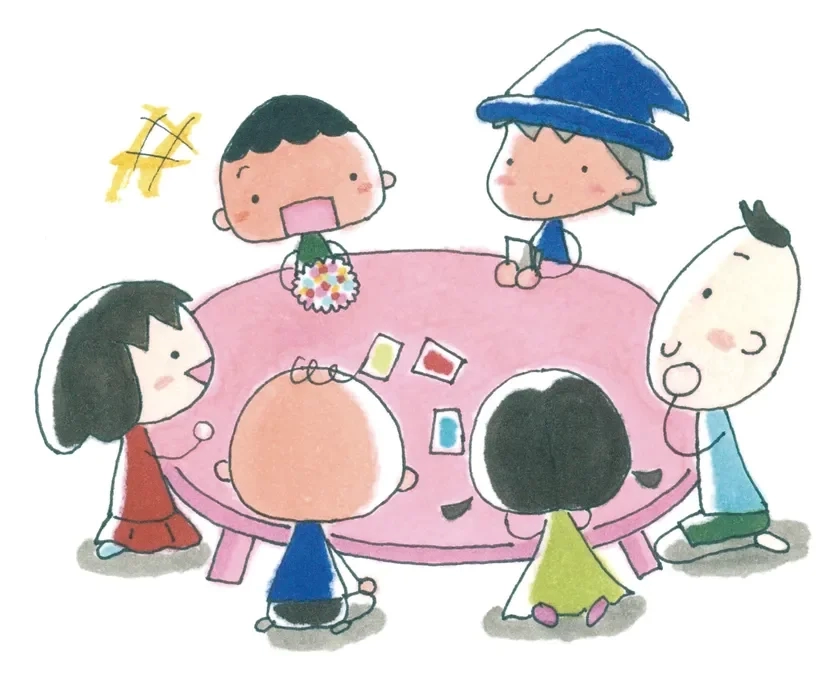
More details on both card sets can be found here: Honnoki Tetsugaku Card Details
The Vision Behind the Cards
The “Tetsugaku Cards” originated from a profound observation by their translator, Ms. Naoko Richters.

Ms. Richters, a scholar in comparative education and sociology, residing in the Netherlands since 1996, is a leading figure in introducing the Jena Plan education system to Japan. She recounts a transformative experience in a Dutch elementary school: “I was deeply moved to tears watching 4 and 5-year-olds, seated in a circle, use these cards during a philosophy class. The teacher simply facilitated, and profound, insightful words poured from the children, ideas even adults might not conceive.” She has contributed significantly to the Japan Jena Plan Education Association (Japan Jena Plan Education Association) and continues to organize workshops with the original authors.
The original concept for the “Tetsugaku Oshaberi Card” was developed by Dutch author and philosopher, Fabienne van der Ham.

Ms. van der Ham, who has extensive experience teaching poetry, creative writing, and children’s philosophy in Dutch elementary schools, created these cards to provide diverse teaching materials for children, teachers, and parents to embark on philosophical dialogues. Her first work, “50 Philosophical Questions for Children: Tetsugaku Oshaberi Card,” quickly gained acclaim, winning the Berry Heesen Award for excellent philosophical teaching materials in November 2012 from the Dutch Children’s Philosophy Center. These cards are now widely used in elementary schools across the Netherlands and other European countries, encouraging children to think critically and discover their own unique answers.
A video featuring an interview with Ms. Naoko Richters about the “Tetsugaku Oshaberi Card” is available here: Tetsugaku Oshaberi Card Interview
Guiding the Dialogue: The Instructor
The “Tetsugaku Dialogue Cafe” will be guided by Mr. Toshinao Takahashi, the representative of Honnoki Co., Ltd.

Established in 1986, Honnoki is a small publishing house known for its books on a wide range of topics, including environmental issues, volunteering, parenting, education, social inequality, and health. Mr. Takahashi’s encounter with Ms. Richters opened his eyes to diverse European educational methods like the Jena Plan. Recognizing the value of the Dutch “Tetsugaku Cards,” he published their Japanese versions and has since been instrumental in organizing adult philosophical dialogue events using these cards.
Voices from Past Participants
Participants have shared positive experiences, highlighting the value of these sessions:
-
“It was very good to organize my thoughts and broaden my perspective by listening to others’ opinions. I definitely want to participate again.”
-
“I found unexpected common ground even when I thought opinions were different, which helped me organize my own thoughts. I realized how important it is to have such moments of reflection.”
These testimonials underscore the profound yet accessible nature of philosophical dialogue, offering a refreshing break from daily routines.
Event Details
-
Date & Time: Friday, April 3, 2026, 19:00 – 20:30 (Doors open at 18:45)
-
Venue: Hibiya Library & Culture Museum, 1st Floor Library Shop & Cafe Hibiya
- Please note: No parking or bicycle parking facilities are available. Please use public transportation.
- Capacity: 15 participants (First-come, first-served basis; registration closes once capacity is reached)
-
Participation Fee: 1,500 yen (Includes one drink: coffee or tea)
-
Target Audience: Beginners in philosophical dialogue, 18 years and older.
How to Apply
Applications for the “Tetsugaku Dialogue Cafe” began on Friday, January 23, 2026, at 10:00 AM (JST).
Please apply via the event reservation site “Peatix”:
Peatix Event Application

Venue Information
Chiyoda City Hibiya Library & Culture Museum
Official Website
-
Address: 1-4 Hibiya Park, Chiyoda-ku, Tokyo 100-0012
-
Inquiries: 03-3502-3340
Access
-
Toei Mita Line “Uchisaiwaicho” A7 Exit: 3-minute walk
-
Tokyo Metro Marunouchi Line / Hibiya Line “Kasumigaseki” B2 Exit: 3-minute walk
-
Tokyo Metro Chiyoda Line “Kasumigaseki” C4 Exit: 3-minute walk
-
JR Lines “Shimbashi” Hibiya Exit (SL Plaza): 10-minute walk

About Honnoki Co., Ltd.
Honnoki Co., Ltd. is a publishing company established in June 1986, focusing on books related to social issues, education, and lifestyle. The company also engages in educational programs, mail-order, and wholesale businesses.
Honnoki Official Website
A Future of Deeper Connections
The “Tetsugaku Dialogue Cafe” represents a growing trend in Japan towards fostering deeper personal reflection and meaningful communication in relaxed, accessible settings. By integrating philosophical inquiry into everyday life through tools like the “Tetsugaku Cards,” these events offer a refreshing alternative to conventional social gatherings. As more individuals seek opportunities for authentic connection and intellectual stimulation, initiatives like this cafe are likely to expand, enriching the cultural landscape and promoting a more thoughtful society. This blend of intellectual engagement with a casual, inviting atmosphere could certainly inspire similar events globally, furthering the reach of accessible philosophy.