
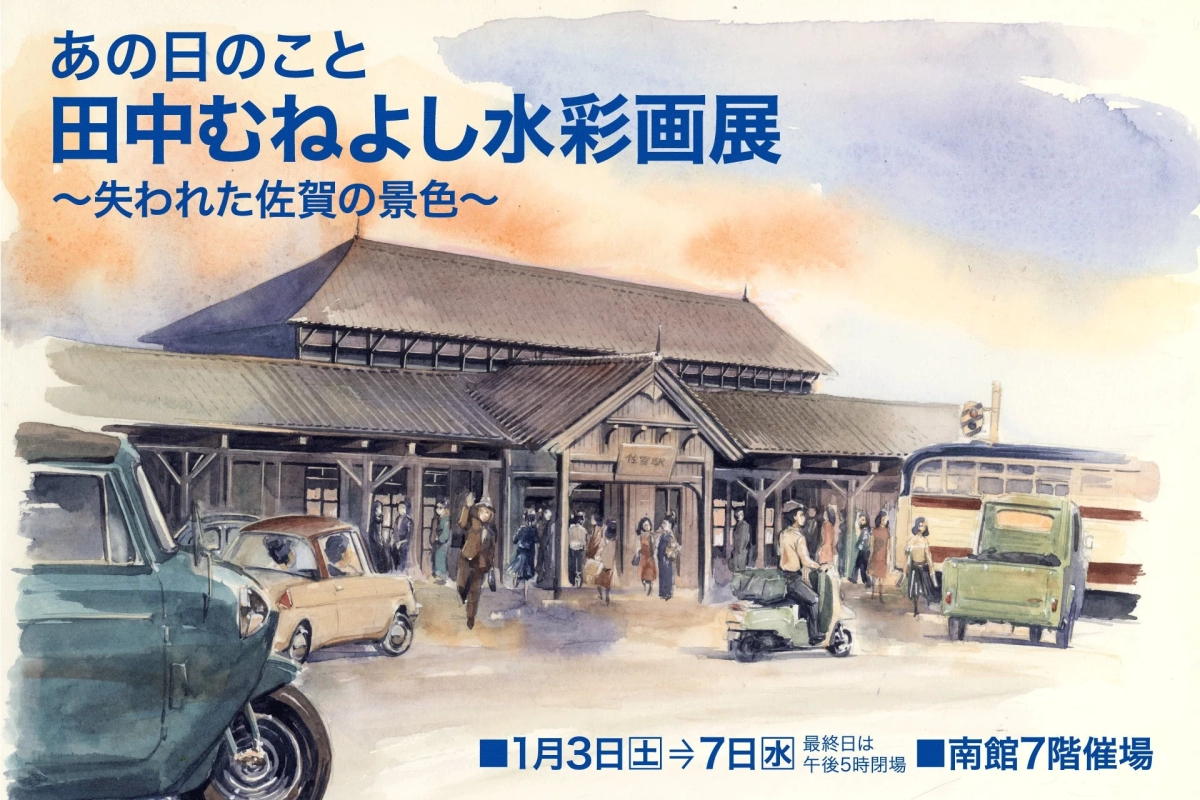
Rediscover Saga’s Golden Era Through Watercolors
From January 3 to January 7, 2026, Saga Tamaya is set to host a unique exhibition titled “Those Days: Muneyoshi Tanaka Watercolor Exhibition ~Lost Scenery of Saga~.” This five-day event, held at the South Building 7th Floor Exhibition Hall, invites visitors to immerse themselves in the ‘Showa Retro’ charm of Saga, as depicted by local popular manga artist Muneyoshi Tanaka.
“Showa Retro” evokes a deep sense of nostalgia for Japan’s Showa era (1926-1989), a period of remarkable growth and distinctive cultural aesthetics. Tanaka’s watercolors beautifully capture the warmth and everyday life of this bygone era, allowing viewers to experience the vibrant, yet often forgotten, landscapes of Saga.
A Glimpse into the Past: Featured Artworks
The exhibition showcases approximately 30 original watercolor paintings, alongside catalogs, calendars, and postcards, each telling a story of Saga’s history. These works are more than mere illustrations; they are windows into cherished memories and a tangible connection to the past.
Ohori no Boat

This painting brings to life the beloved “Ohori no Boat,” a cherished spot for Saga citizens. The artist himself recounts riding these boats as a sixth grader in 1976. The area, once Central Park, transformed into a parking lot in 1977, and the boat rental service, though initially surviving, eventually closed in 1998 due to declining visitors. The painting captures the serene joy of a leisurely afternoon on the water, a simple pleasure now lost to time.
Chuo Odori Arcade
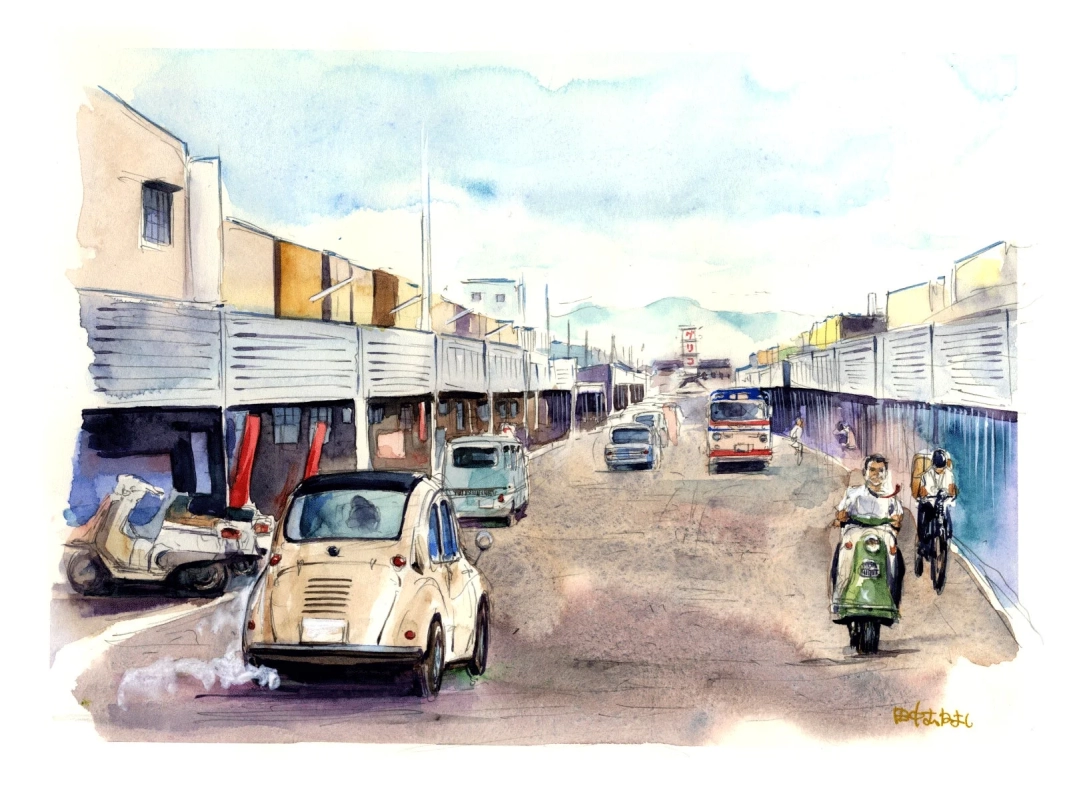
“Chuo Odori Arcade” transports viewers to a bustling Showa-era main street, even more vibrant than today. Established in 1959, the arcade witnessed the city’s evolution, with the opening of Nichiyu in 1964 and the completion of the road south of Dobashi in 1965, coinciding with Saga Tamaya’s relocation. The painting includes the iconic Glico advertisement tower, which was removed in 1966, providing a precise snapshot of this lively period before the arcade’s own removal in 1986 due to aging.
Higashi Saga Station Crossover Bridge
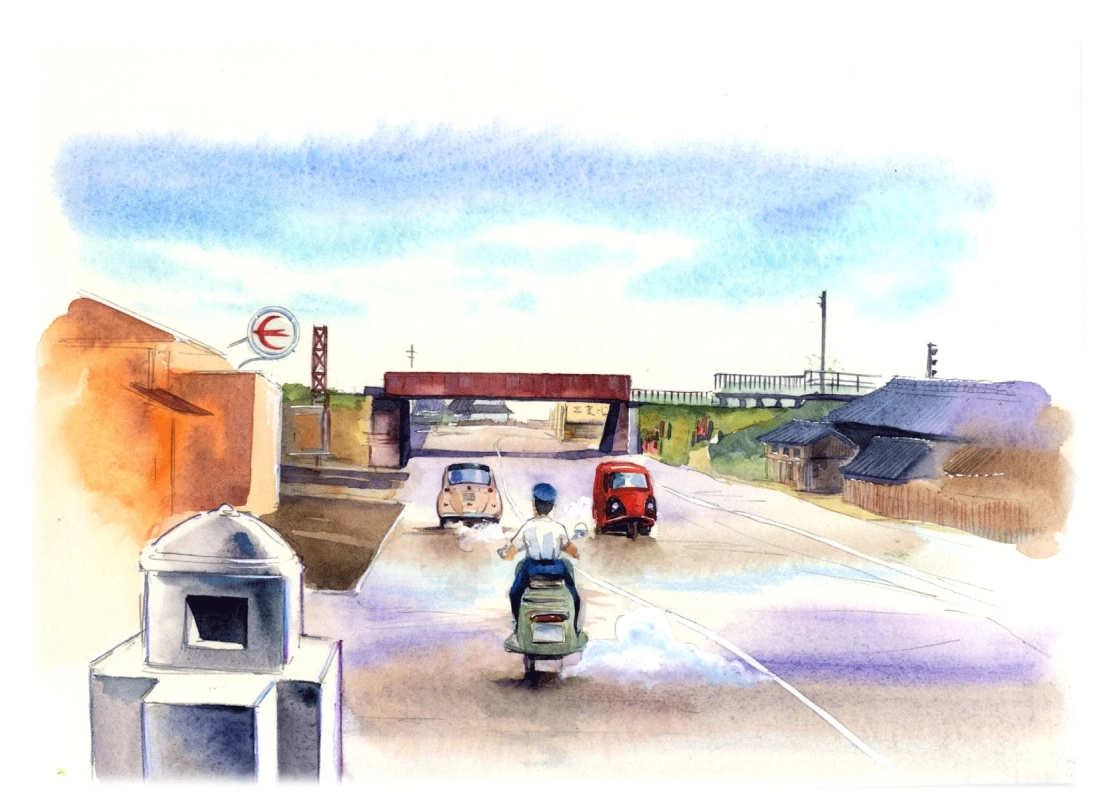
This piece features the distinctive crossover bridge of Higashi Saga Station, a landmark of the old Saga Line that traversed the “Kantsu Doro” (Route Old 34). The area was once considered a potential mall town, bustling with car dealerships. The artist’s quest for accuracy even led him to consult social media regarding the bridge’s color, ultimately choosing a reddish hue based on local testimonies and artistic flair. It’s a testament to the artist’s dedication to historical detail, even while infusing his work with a personal touch.
Katadae Pedestrian Bridge
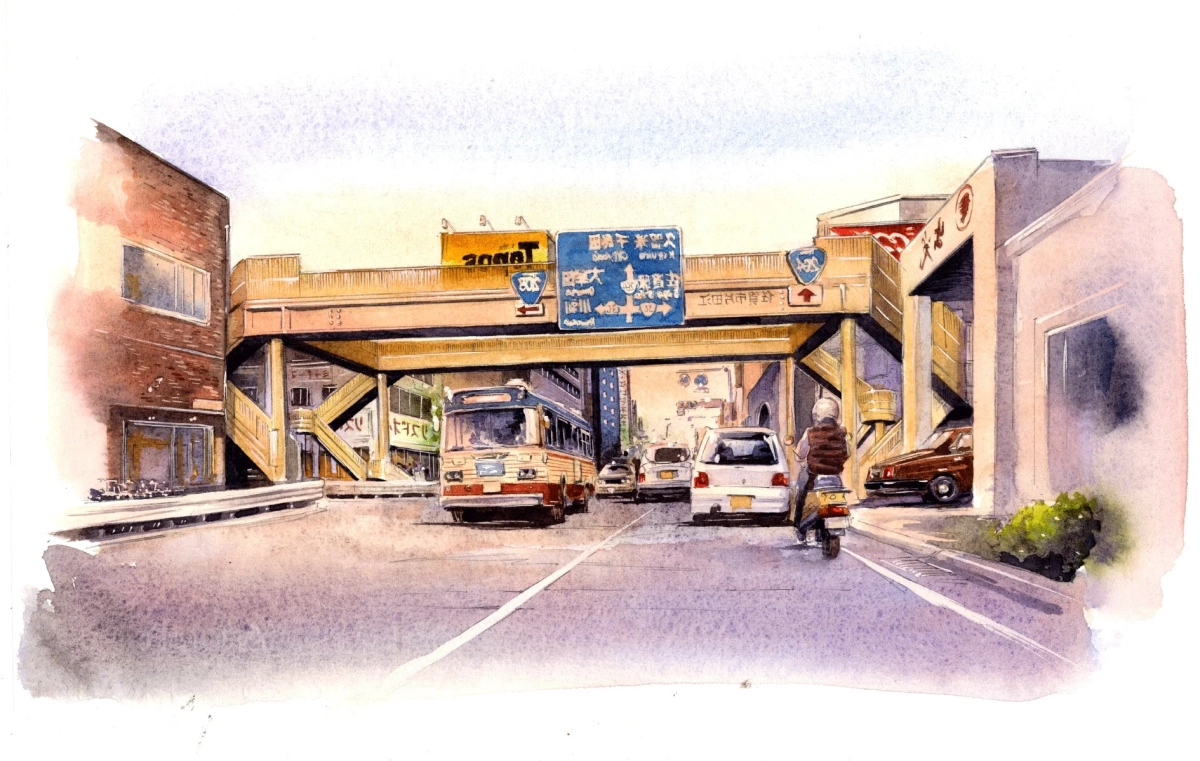
Saga Prefecture’s first pedestrian bridge, the Katadae Pedestrian Bridge, opened in April 1971. Its construction reflected the needs of a growing population during the second baby boom, addressing increased traffic and the safety of schoolchildren. Though a significant structure for its time, it was dismantled in 1999 due to aging, declining child population, and concerns about disaster risk. The painting also subtly includes the former “Topos” supermarket, which opened in 1982 and closed in 1995, anchoring the scene in a specific time.
Former Saga Prefectural Police Headquarters
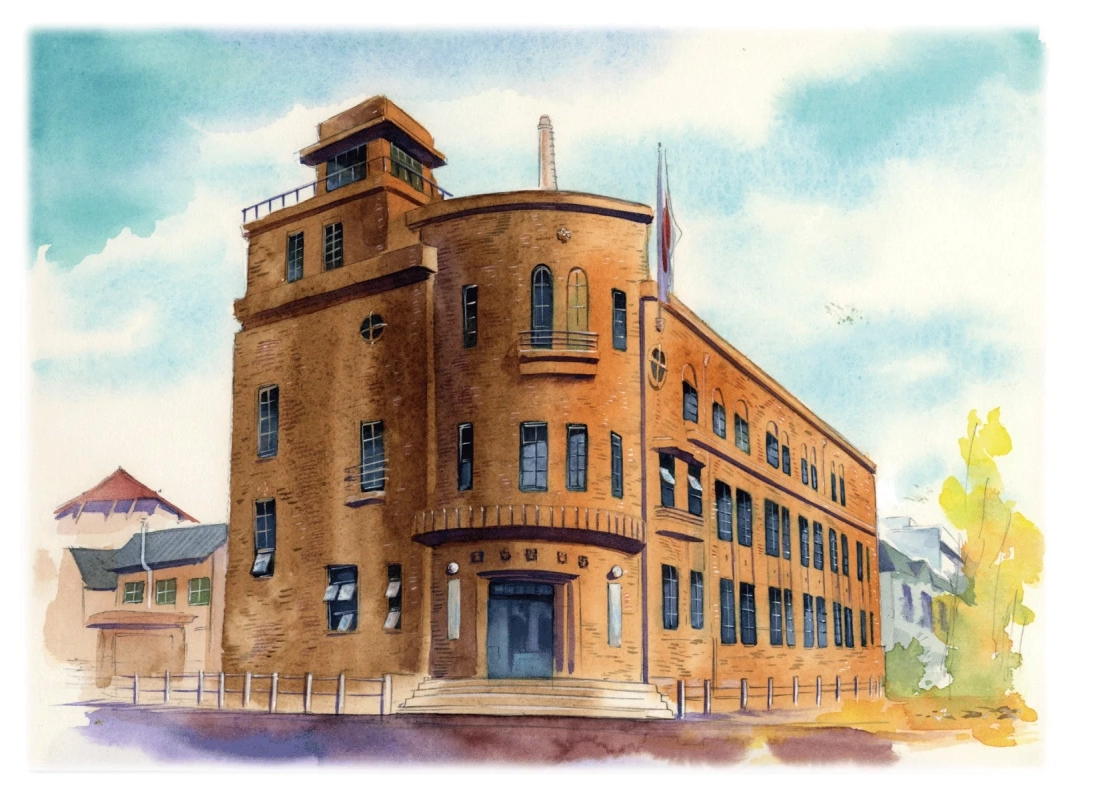
The brick building of the Former Saga Prefectural Police Headquarters, standing proudly along Route 264 (Kantsu Doro), always appeared robust and dignified. It even made an appearance in old tourist postcards and the Showa-era film “Harikomi” (The Chase), signifying its importance in Saga’s urban landscape. This painting captures its enduring presence.
Saga Station Evening View
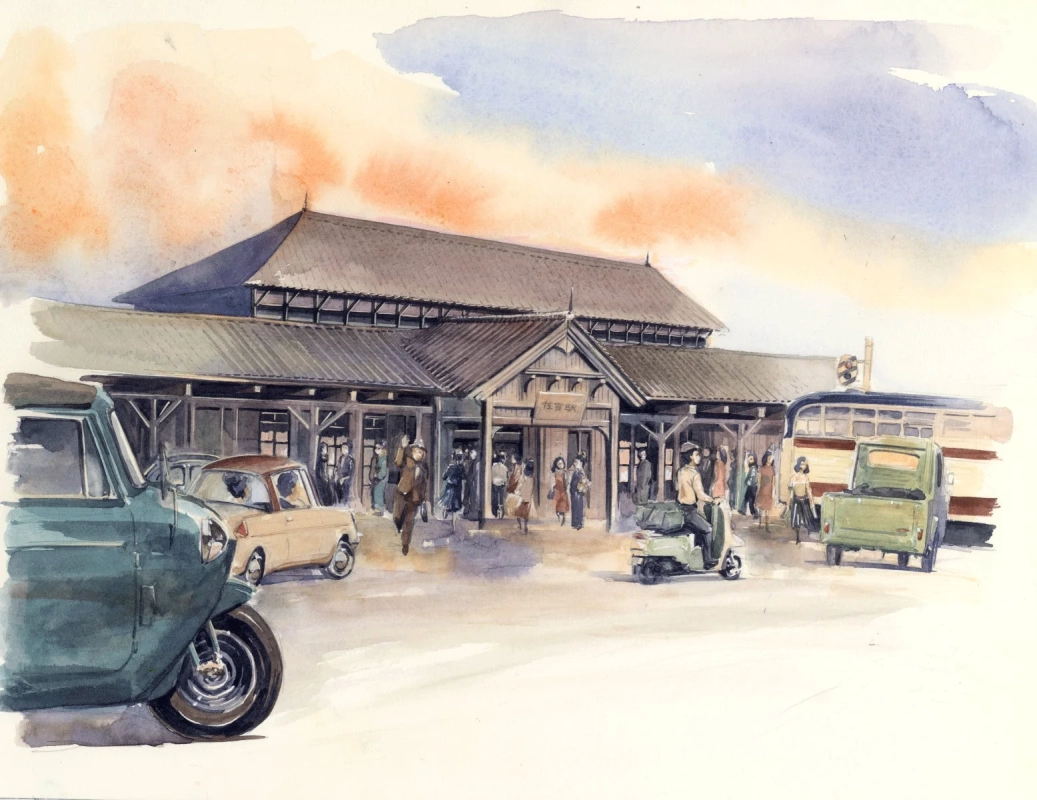
This artwork evokes the hurried atmosphere of dusk in those days. The artist reflects on the feeling of being rushed home as a child, fearing a scolding, yet recalling the slow, warm, and secure Showa times spent under parental care, with comfortable homes and meals. It’s a poignant portrayal of childhood memories bathed in the warm glow of a setting sun.
Souten no Saga Station
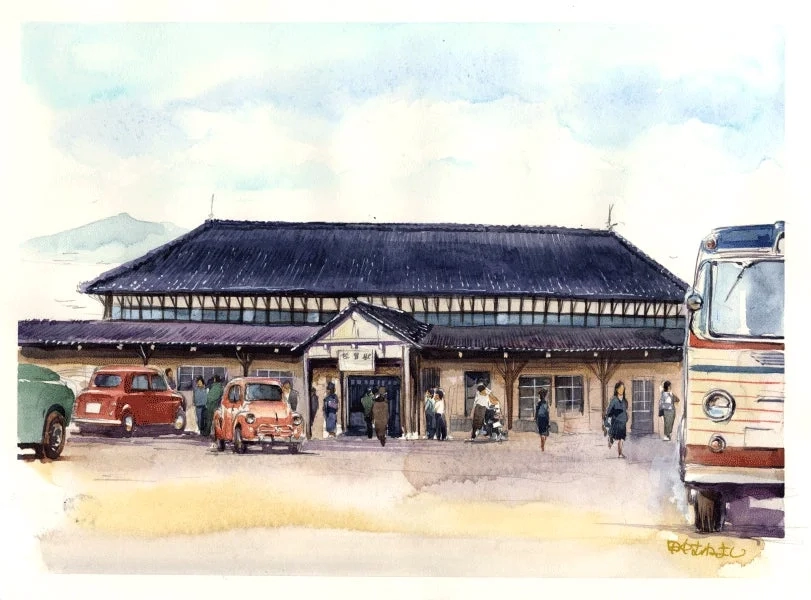
The “Souten no Saga Station” painting portrays Saga Station under a clear blue sky. For many, including the artist, the station was primarily for long-distance travel, while buses were common for city excursions. The artist beautifully describes the “nervous excitement” felt when passing through the ticket gates back then, a feeling that sometimes resurfaces even today, accompanied by the faint, familiar tang of old wardrobes on