
- Unlocking Gen Z’s Heart: The Power of “Kimazui” in Modern Marketing
Unlocking Gen Z’s Heart: The Power of “Kimazui” in Modern Marketing
In a world saturated with polished brand messages, a new strategy is emerging to capture the attention of Generation Z: embracing “awkwardness.” Z-SOZOKEN (Gen Z Creativity Research Institute), a think tank run by Fiom LLC, has released its second research report, delving into Gen Z’s intricate relationship with “kimazui” (気まずい), a Japanese term encapsulating feelings of awkwardness, discomfort, or embarrassment. This extensive 52-page report, based on a survey of approximately 300 Gen Z individuals conducted by their peers, reveals how this seemingly negative emotion can be transformed into a powerful marketing tool.

Traditionally, companies shy away from negative emotions in their communications. However, for Gen Z, “kimazui” is often a wellspring of empathy and relatability. It’s not just about discomfort; it’s about shared human experiences that can forge genuine connections. The report introduces the proprietary “2R1S” framework, designed to help brands navigate this nuanced emotion and create impactful campaigns.
The “2R1S” Framework: Three Paths to Gen Z Engagement
The “2R1S” framework outlines three distinct approaches for brands to strategically integrate “kimazui” into their marketing efforts:
-
Resolution (解決型): This approach focuses on showcasing how a product or service can alleviate an awkward situation. Imagine a board game that breaks the ice at a quiet gathering or a snack that lightens the mood. The product becomes the solution to an uncomfortable moment.
-
Reversal (逆転型): Here, brands intentionally expose perceived negative elements like being “bad-tasting” or “uncool,” transforming them into sources of humor and affection. By openly acknowledging and even exaggerating the awkwardness, it becomes a “neta” (ネタ), a relatable joke that fosters endearment.
-
Sympathy (共感型): This method involves realistically portraying everyday awkward moments, eliciting a strong sense of “I get it!” or “So true!” from Gen Z. This shared understanding and empathy build a powerful sense of closeness and affinity with the brand.

Crafting Experiential Strategies for “Kimazui” Moments
“Kimazui” is an emotion that often transcends mere text. To truly convey its essence and impact, experiential tools are crucial. Brands are encouraged to move beyond written content and embrace dynamic formats:
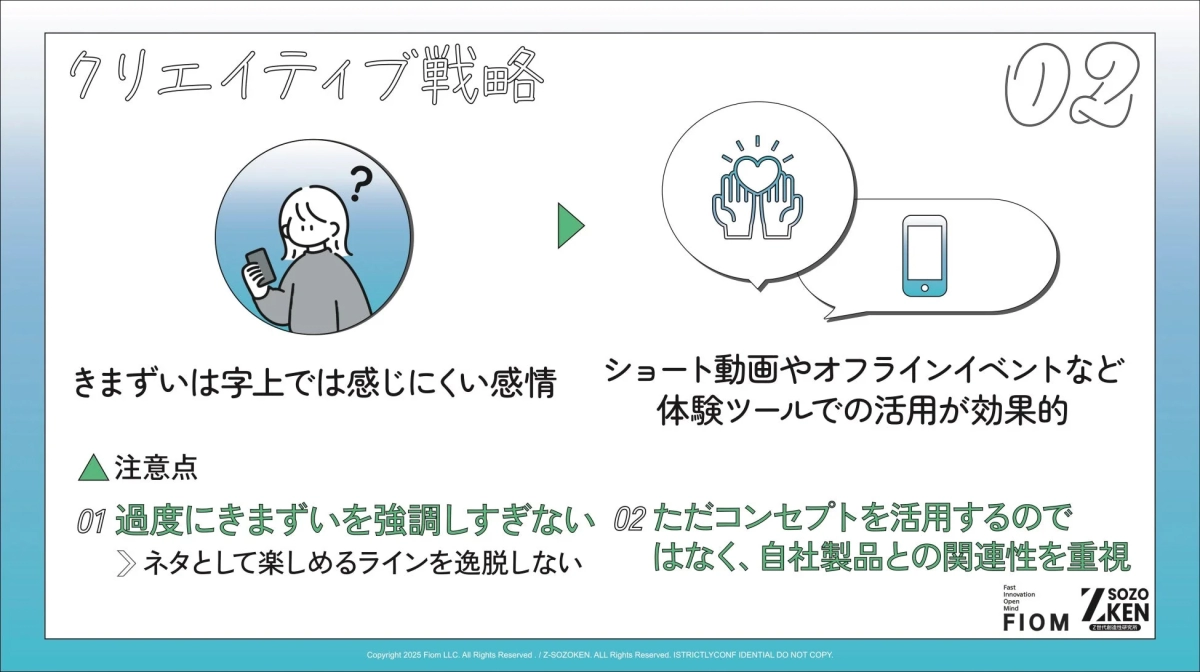
SNS Marketing: The “Awkward Scene Endurance” Challenge
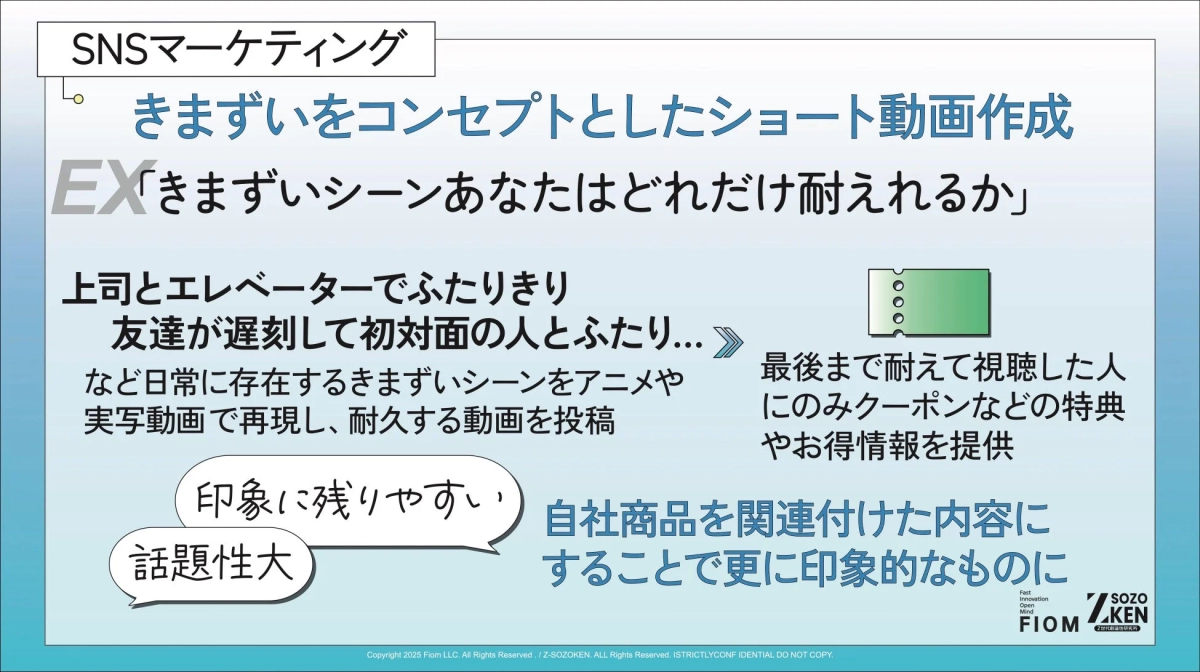
One creative application proposed is the “Awkward Scene Endurance” short video series for social media. By recreating universally relatable awkward scenarios—such as an elevator ride alone with your boss or waiting for a late friend with a stranger—brands can create engaging content. Viewers who “endure” the entire video could be rewarded with coupons or special offers, blending entertainment with promotion.
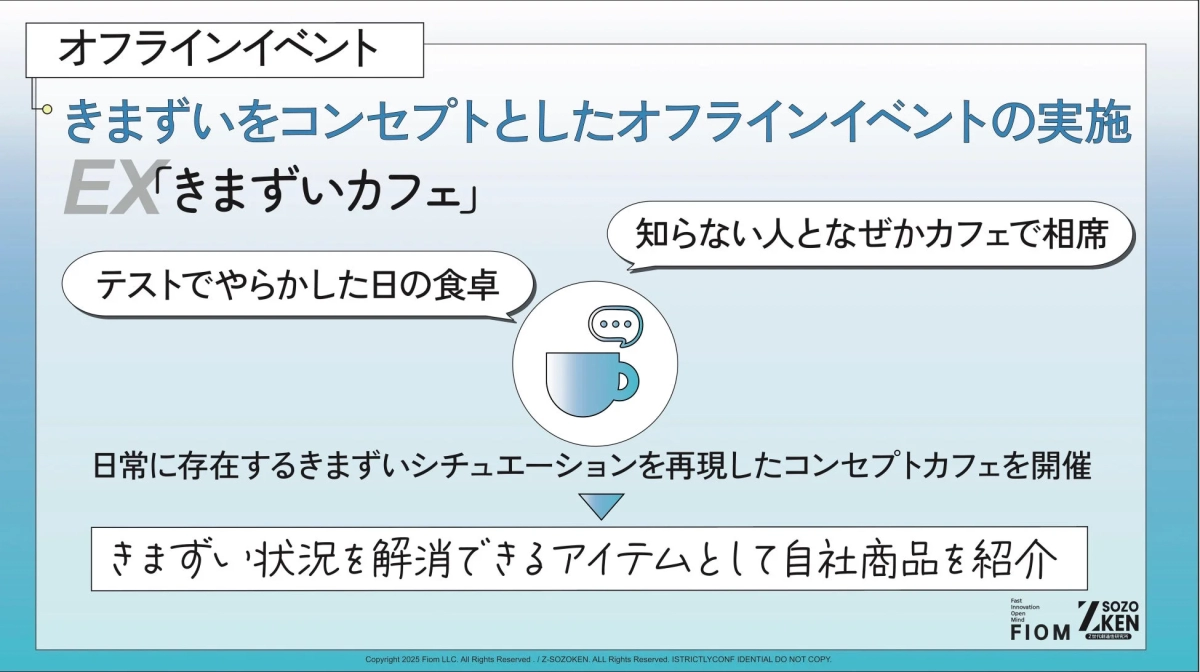
Offline Events: The “Awkward Cafe”
For a more immersive experience, the concept of an “Awkward Cafe” is introduced. Imagine a cafe where patrons are intentionally seated with strangers, or where the ambiance mimics a tense family dinner after a bad test result. By introducing a brand’s product as a “solution to awkwardness” within these curated environments, the product’s benefits are etched into memory through a powerful, tangible experience.
Real-World Examples of “2R1S” in Action
The report highlights several successful marketing campaigns that intuitively utilized the principles of “2R1S”:
-
Sympathy (共感型): A Monster Strike commercial depicting the “friend of a friend” dynamic, a subtle yet universally awkward social situation. The game is then presented as the common ground that dissolves this discomfort, resonating strongly with viewers who found it “too real.”

-
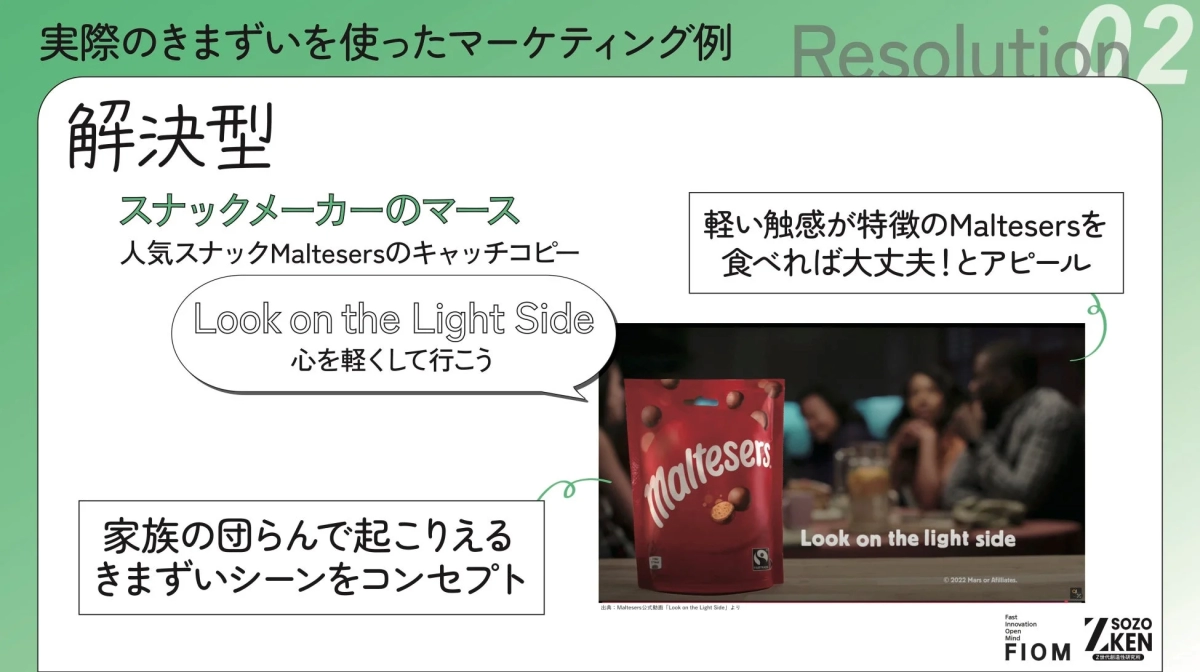
Resolution (解決型): Maltesers, a snack brand, uses its slogan “Look on the Light Side” to position its light-textured chocolates as a way to gracefully navigate awkward family moments. The product offers a simple, sweet escape from minor domestic discomforts.
-
Reversal (逆転型): Q’sai Aojiru (green juice) famously adopted the tagline “It tastes awful, but have another!” By openly acknowledging its unpleasant taste, the brand turned a potential negative into a memorable, humorous, and even trustworthy selling point, suggesting that something so “awful” must be good for you. This approach is mirrored in modern campaigns featuring comedians like Nakayama Kinnikun, who humorously exclaim, “That’s awful! (Kimazui!)” to imply health benefits.

The Appeal of “Humanity” Over Perfection
Yohei Takeshita, CEO of Fiom LLC and Director of Z-SOZOKEN, emphasizes the shift in Gen Z’s preferences: “Many companies strive to present their brands as ‘cool’ and ‘perfect.’ However, what Gen Z truly seeks is a ‘human brand’ rather than a flawless one. By daring to reveal their own ‘awkward failures’ or ‘hidden weaknesses,’ brands can make Gen Z feel understood and instantly bridge the emotional distance.” The “2R1S” framework provides a blueprint for strategically creating these moments of vulnerability and relatability.

What This Means for the Future of Kawaii Culture Abroad
The insights from the “2R1S” framework offer a compelling new perspective for brands targeting Gen Z, especially those engaging with the global Kawaii phenomenon. Kawaii, often perceived as merely “cute,” deeply embodies a broader appreciation for authenticity, relatability, and even the charming imperfections that make something uniquely endearing. By transforming “kimazui” into affection, brands can tap into the core of what makes something genuinely Kawaii – the warmth and connection found in shared human experiences, even the awkward ones. This approach could redefine how Kawaii culture is marketed internationally, moving beyond superficial aesthetics to deeper, more empathetic engagement.
For those eager to dive deeper into this fascinating research, Z-SOZOKEN is hosting a special online lecture, “What is ‘Awkwardness’ that Resonates with Gen Z?” on December 9, 2025. This session will provide a detailed analysis of the report and practical applications of the “2R1S” framework. Companies struggling with Gen Z communication or seeking to transform negative emotions into positive engagement are invited to participate.

For more information and to access the full 52-page research report, please visit:
-
Z-SOZOKEN Official Site: https://z-sozoken.studio.site
-
Fiom LLC Official Site: https://fiom-llc.studio.site
-
Download the full research report: https://z-sozoken.studio.site/report-02/download
Z-SOZOKEN, operated by Fiom LLC, is a next-generation think tank dedicated to uncovering new insights into Gen Z’s realities and values through the lens of Gen Z creators themselves.
Fiom LLC is a creative company specializing in Gen Z marketing, with all members being Gen Z. They provide end-to-end support from research and strategy to planning, production, and operation of advertising communications for the Gen Z demographic.


