
The Rise of “KimaZ”: A Universal Emotional Buffer
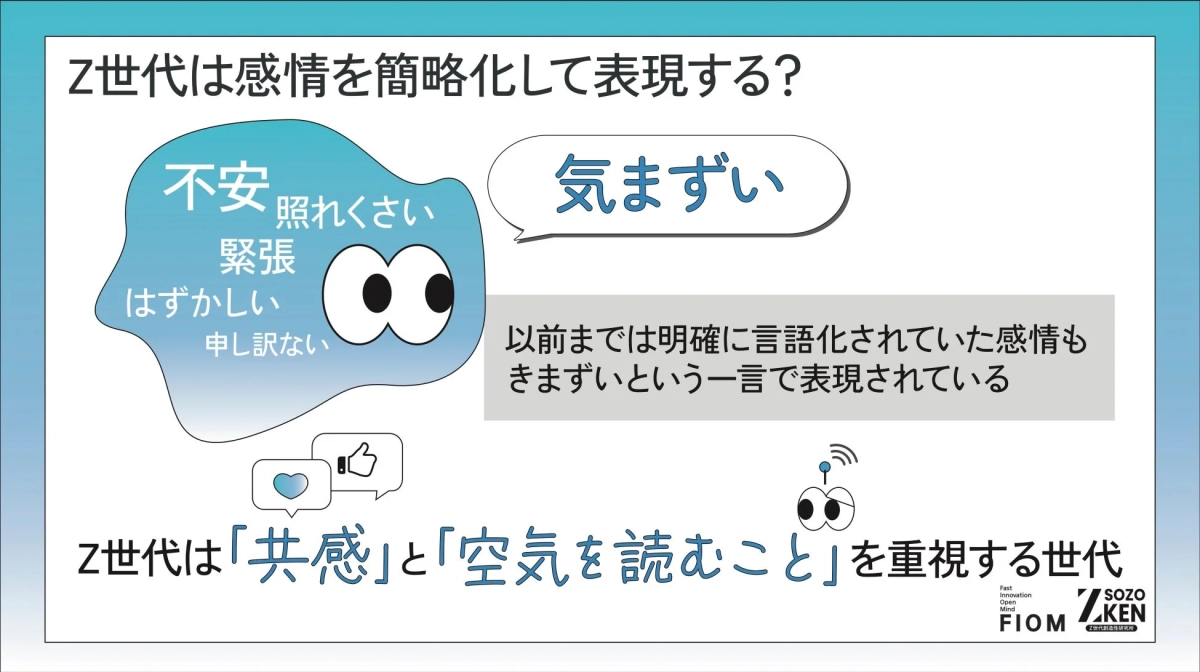
Z-SOZOKEN’s second research report, focusing on “The Sensation of Awkwardness in Gen Z,” dives deep into the intricate psychology behind this trend. Based on a survey of approximately 300 Gen Z individuals (aged 18-24) conducted by fellow Gen Z researchers, the study highlights how “kimazui” functions as a “universal buffer,” encapsulating multiple negative emotions. Rather than articulating each feeling precisely, which might risk being perceived as too heavy or demanding an explanation, Gen Z opts for a lower-resolution term. This helps them avoid undue seriousness and foster easier empathy from others.
This simplification isn’t about intellectual deficiency; it’s a highly refined social maneuver. By using “kimazui,” Gen Z can soften rejections, convey apologies gently, and diffuse potentially tense situations without explicit confrontation. It’s a testament to their prioritization of harmony and shared understanding in communication.
From “KY” to “KimaZ”: An Evolution in Reading the Room
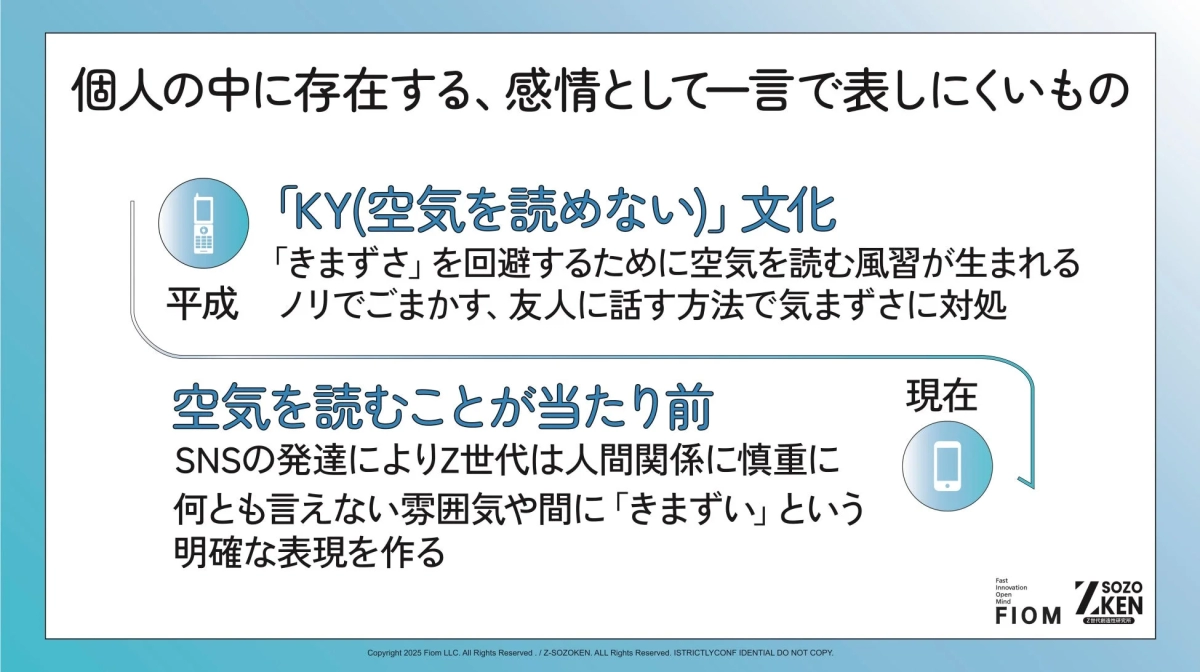
To understand “kimazui,” one must look back to the Heisei era’s prevalent “KY” (Kuuki Yomenai – unable to read the air) culture. That era emphasized the importance of “reading the room” and avoiding social faux pas. Gen Z has not abandoned this, but rather evolved it. They’ve moved beyond merely reading the atmosphere to actively naming and sharing the “awkwardness” itself, transforming it into a shared experience.
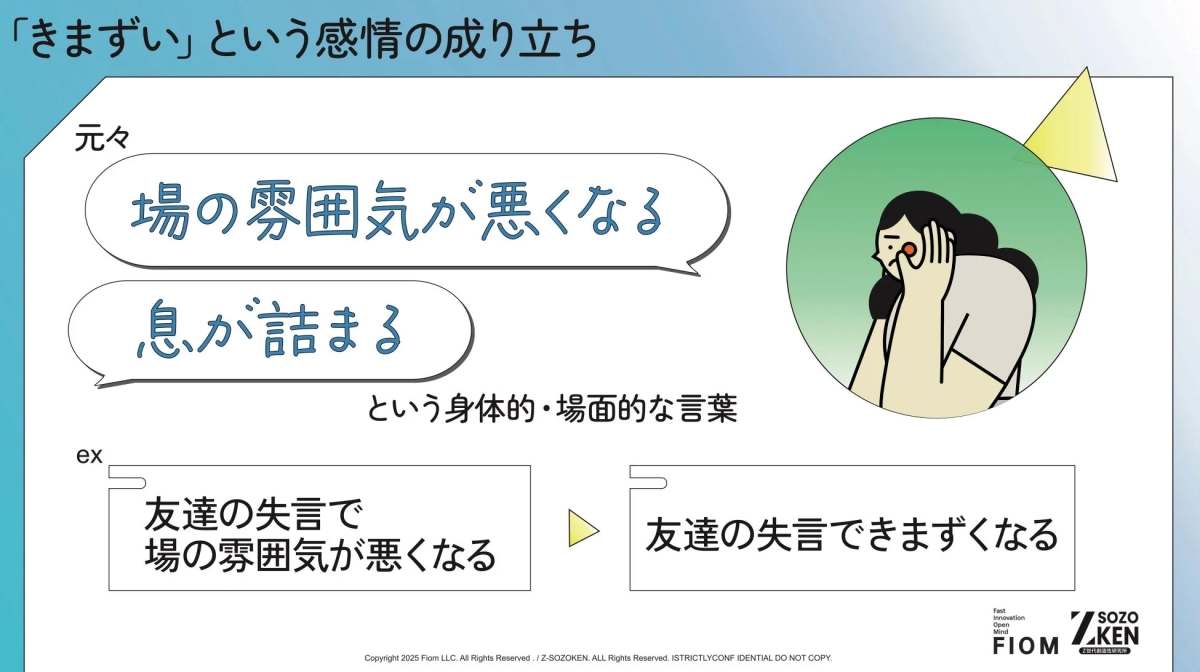
Initially, expressions like “kimazui” or “息が詰まる” (suffocating) were used to describe physical or situational discomfort. However, as shown in the research, its usage expanded to interpersonal contexts, such as a friend’s slip-up creating a bad atmosphere, eventually solidifying as a term for internal emotional states.
Today, with the pervasive influence of social media, Gen Z has become even more cautious in their relationships. They have coined “kimazui” as a distinct term for those ambiguous, hard-to-define social pauses or atmospheres, making it a pop cultural expression that helps them cope.
Emotions frequently simplified into “kimazui” include:
-
Anxiety
-
Shyness
-
Tension
-
Embarrassment
-
Apology
An Expert’s View: Beyond Vocabulary Shortage
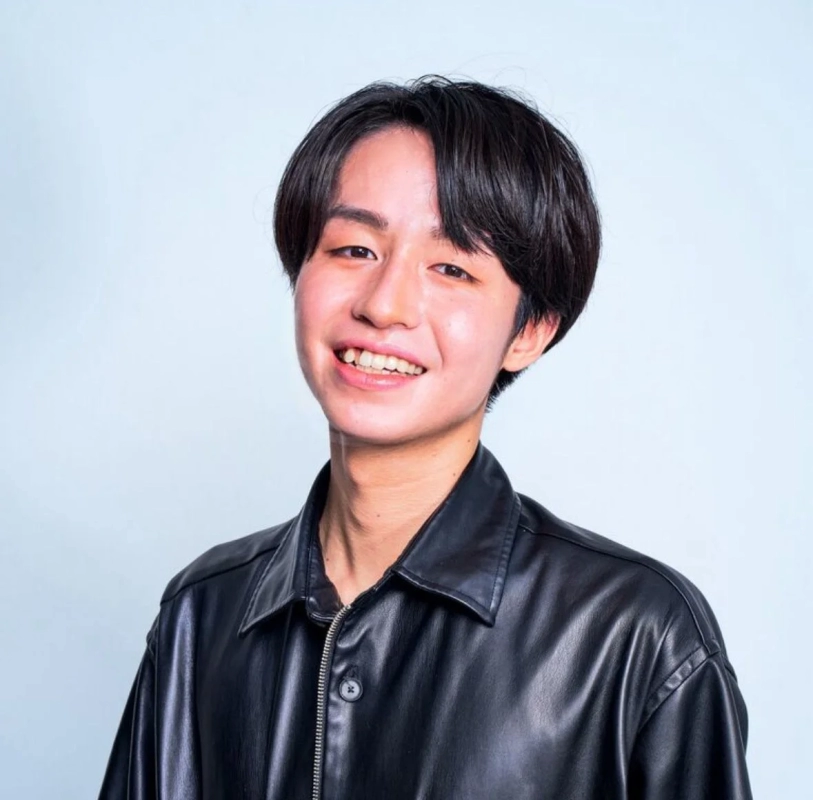
Yohei Takeshita, Director of Z-SOZOKEN and CEO of Fiom LLC, offers a compelling perspective:
“Adults often remark that young people nowadays only say ‘yabai’ (awesome/terrible) or ‘kimazui,’ suggesting a decline in vocabulary. However, as a Gen Z individual myself, I can confidently say this is not due to a lack of words. Rather, it’s a deliberate choice to be vague, a result of being overly considerate of others and the surrounding atmosphere.
For instance, imagine declining an invitation to dinner from a senior. Saying ‘I don’t want to go’ is too blunt, and lying about having plans feels uncomfortable. So, we might say, ‘Ah, that day is a bit kimazui, haha.’ This softly conveys refusal or apology. By condensing emotions that should ideally be articulated as ‘I’m sorry,’ ‘I’m anxious,’ or ‘I’m embarrassed’ into a single ‘kimazui,’ we lower the emotional resolution. This helps us avoid seriousness and reduce friction with others.
Just as ‘KY’ became popular in the Heisei era to emphasize not disrupting the atmosphere, Gen Z has evolved this culture further. We label a potentially fragile atmosphere as ‘kimazui’ and share it as a lighthearted topic, using it to repair the situation. ‘Kimazui’ is our strongest cushion word, a sophisticated survival strategy for navigating our high-context SNS society.”
Deeper Insights: Z-SOZOKEN Academy Special Lecture
For those seeking to understand this fascinating phenomenon further, Z-SOZOKEN is hosting its second “Z-SOZOKEN Academy Special Lecture” on December 9, 2025. This online event will delve into the full 52-page research report, exploring how Gen Z transforms negative “awkwardness” into “empathy” and “entertainment,” and its applications in marketing through the “2R1S framework.”
This lecture is particularly relevant for those who struggle to grasp the trend of “kimazui,” worry about misjudging communication with Gen Z, or seek ways to turn negative emotions into positive engagement in content creation.
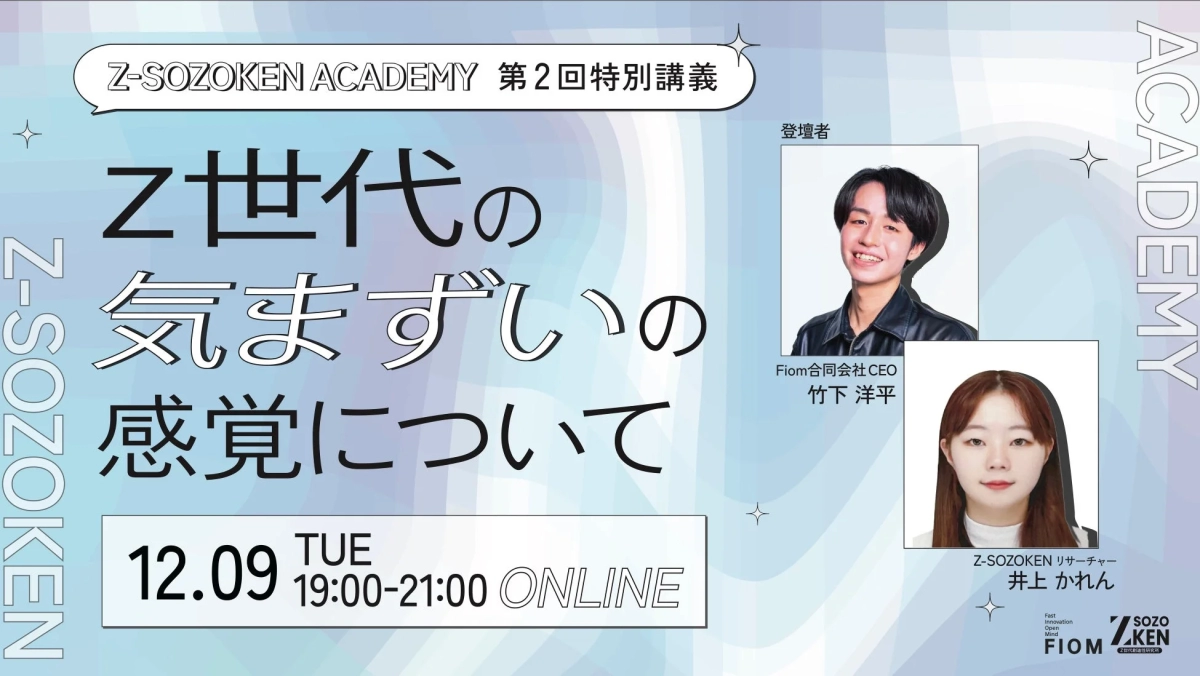
“Z-SOZOKEN Academy Second Special Lecture” Overview:
-
Title: “What is the ‘Awkwardness’ that Resonates with Gen Z? ~Thorough Analysis of Gen Z’s Sense of Awkwardness~”
-
Date: December 9, 2025 (Tuesday) 19:00-21:00 JST
-
Format: Online (Zoom Webinar)
-
Participation Fee: Normally 11,000 JPY (tax included) → First-time participants are invited for free.
-
Organizers: Fiom LLC / Z-SOZOKEN (Gen Z Creativity Research Institute)
For a comprehensive understanding, the full 52-page research report, including specific situations where Gen Z feels “kimazui” and the “2R1S” marketing framework, is available for free download.
- Download the Research Report: https://z-sozoken.studio.site/report-02/download
The Future of Kawaii Culture Abroad
The “kimazui” phenomenon, with its emphasis on softening interactions and fostering empathy, offers a unique lens into the evolving landscape of Japanese youth culture. This approach to communication, which prioritizes harmony and avoids direct confrontation through a charmingly understated expression, resonates with the broader spirit of Kawaii. It suggests that even in navigating complex social dynamics, there’s a desire for lightness and shared understanding that can be perceived as endearing and approachable. As global audiences continue to embrace Kawaii culture, understanding these nuanced communication strategies of Gen Z will be key to appreciating the depth and adaptability of Japanese social expression. This isn’t just about a word; it’s about a generation’s ingenious way of staying connected and true to themselves in a world that often demands too much. It’s a subtle, yet powerful, contribution to the tapestry of modern Kawaii.
For more information on Z-SOZOKEN and Fiom LLC:
-
Z-SOZOKEN Official Website: https://z-sozoken.studio.site
-
Fiom LLC Official Website: https://fiom-llc.studio.site
-
Contact Form: https://fiom-llc.studio.site/contact